
|
|
|
Features of Faculty of Modern Chinese
Studies
-
Fostering human resources that
connect Japan and China, a country that is making remarkable economic
progress
China, which has turned into the greatest trading partner of Japan, is
expected to develop further as a result of the economic effect of Shanghai Expo in 2010. The Faculty of
Modern Chinese Studies fosters human resources who can comprehensively
understand the present situation of China, which is showing its presence
increasingly in international society, and play an active part as a bridge
between Japan and China.
-
Understanding the actual situation
of China more in depth with importance attached to field experience
The Faculty of Modern Chinese Studies offers a curriculum focusing on a
hands-on program, in which all second-year student study in China for four
months, and an optional field research and training program and internship
program. It attaches importance to the students’ understanding of China
through their hands-on experience.
-
Learning English and Chinese, both
of which are required by business society
Chinese language education to students starts immediately after they
enter Aichi University in the aim of enabling them to pass the sixth grade
Hanyu Shuiping Kaoshi (HSK), which is a Chinese proficiency examination that
serves as a requirement to enter a Chinese liberal arts university. Students
can learn English for the four-year period in pursuit of high linguistic
capabilities demanded in the business scene.
-
University’s exchange with China
exceeding 100 years lie in the backgrounds of research and educational power
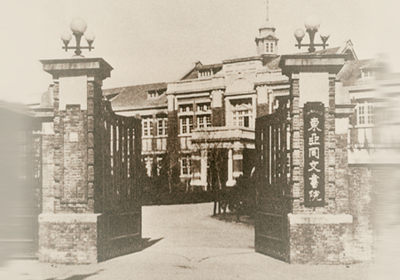
Aichi University originates from Toa Dobunshoin University, which was
established in Shanghai, China, in 1901. Backed by Aichi University’s
exchange activities with China exceeding a century, Aichi University has
built an overwhelmingly high record of accomplishment with the reputation
that it is the best university for research and education on China. The
university’s exchange activities include exchange agreements with 11
universities, the compilation of Chinese-Japanese comprehensive dictionary,
and the adoption of three programs as Center of Excellence Good Programs
(COE-GPs) by the Ministry of Education, Culture, Sports, Science and
Technology.
How to Learn for Four Years
-
Linguistic
education specializing in English and Chinese
The Faculty of Modern Chinese Studies offers
Chinese classes, ranging from a basic Chinese class to an advanced class
that includes presentation and business conversation lesson. English classes
are offered according to the skill level of each student in the aim of
enabling the student to acquire English proficiency steadily.
-
A wide range of subjects enabling
students to understand China in a comprehensive way
Offering courses covering research subjects on China, such as politics,
economy, language, and culture. Three courses selectable are offered to
students in their second year so each student can learn systematically
according to his or her interest.
-
A curriculum attaching importance to
hands-on experience.
The Faculty of Modern Chinese Studies has a curriculum based on three
hands-on principles that attached importance to hands-on experience and
enable students to understand China in depth. Furthermore, the Faculty of
Modern Chinese Studies promotes students’ long-term studying abroad with the
recognition of credits acquired abroad.
Three hands-on principles
Hands-on program in China
All second-year students are expected to study at Nankai University of
Tianjin for four months in the spring semester and learn the language and
have firsthand knowledge of Chinese culture.
Field research and training in China
Fieldwork is implemented for third-year students in China in their
spring term to understand the real present situation of China.
Internship program in China
Students experience on-the-job training at Japanese subsidiaries in
China so that they will know the actual business scene and use the
experience for a reference to consider their future occupations.
Three specialized courses selectable are
offered to students in their second year and beyond.
The three advanced programs are offered to each student for their second
year.
Department of Modern Chinese Studies:
Business
Students study China’s politics, economy, industry, foreign
relations, and relationship with Japan, along with relevant social and
historical background information. This knowledge helps students develop the
skills necessary to conduct smooth negotiations and transactions with Chinese
counterparts in business endeavors such as trade and investment.
International Relations
This course trains people who can contribute to the development of friendly relations between Japan and China and who can play active roles in international society through a strategic perspective.
Students study to have a comprehensive understanding of regional issues including the politics and economy of East Asia, economic development of developing countries, international cooperation, international culture, and global issues of food, population, and the environment.
Chinese Language and Chinese Culture
This course trains people to have a good understanding of Chinese culture, so they can
contribute to mutual understanding with diverse ethnic groups within the Chinese-speaking world.
Students acquire skill in Chinese and study modern Chinese language, literature, art, society, history, and thought to understand the characteristics of Chinese culture.
|