
|
|
|
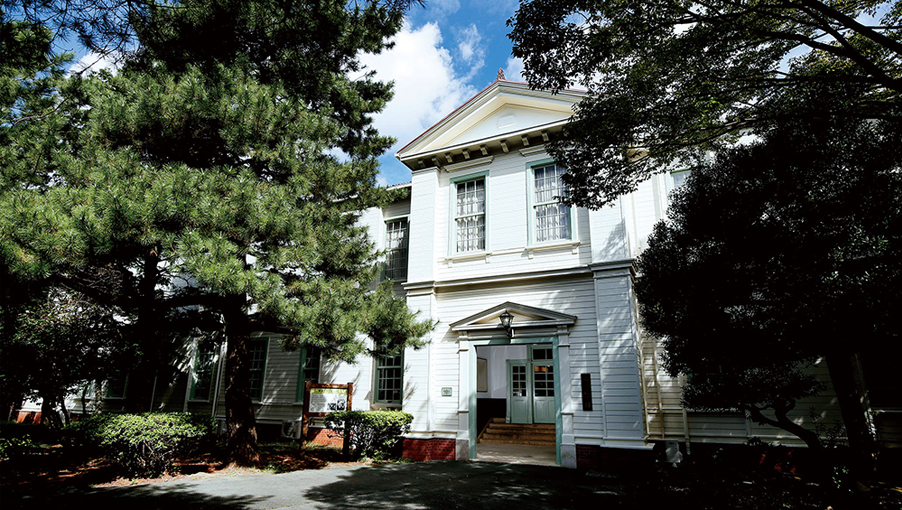
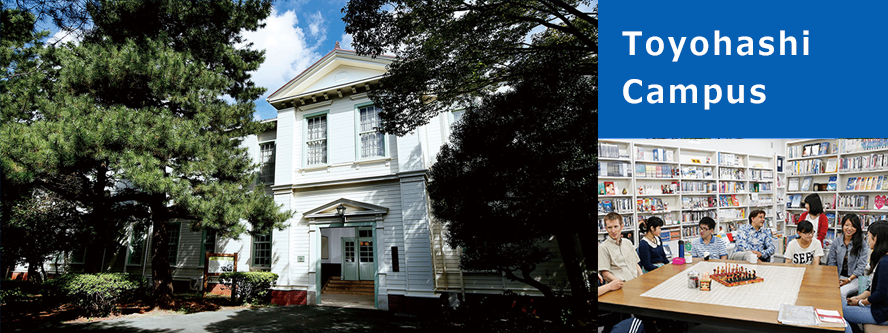
The information below is for graduate programs at the Toyohashi Campus:
- Department of Economics:
- Economics
This section offers the following courses; Theory and Information, Social Economics, Finances and
Policies, Regional Economy Research, and International Area Studies. The program
seeks to train economics researchers and professionals with advanced specialized
knowledge so that they can play key roles in our swiftly changing society. The faculty also
teaches students who plan to become licensed tax accountants and CPA's. In addition, the section
has many adult students carrying out research based on their abundant life experience.
- Department of Humanities:
- Japanese Humanities Culture
The curriculum is based on interdisciplinary studies of Japanese history and Japanese literature that show remarkable
trends in internationalization, as well as other fields of Japanese culture such as folklore, religious studies, and
Japanese language. Members of the section carry out research in history, literature, and various cultural fields from
ancient to modern times, while aspiring to new research areas not bound by each field.
Empirical research is valued,
especially research on diversity and similarity in Japanese culture.
- European and American Culture
The aim of study in this section is to analyze and investigate European and American culture from a broad academic
viewpoint, not bound by a small and specialized area. It considers European and American culture not only objectively, but also as the common heritage of mankind. It researches and tries to integrate
western ideas which have influenced the modern world in the fields of literature, languages,
and socio economics, and also looks at
the concept of diversity and the formation and features of European and American culture. In this way European and
American culture can contribute so that cross-cultural contact and exchange become fruitful.
- Local Community System
This section aims for the development of new research areas based on integrating
the conventional theses of community, local composition, the local environment,
and so on, as a means of understanding a community systematically. It trains
researchers and professionals to combine and integrate their knowledge of
individual areas with an understanding of related fields. The program combines
exposure to fundamental areas such as regional planning and development,
industry and culture, social welfare, and environmental issues with an emphasis
on the interrelationships between fields in order to create the comprehensive
perspective and sense of social planning sought by regional public organizations
and local government.
- Department of International Communication:
- International Communication
At the same time as globalization extends and cross-cultural societies have grown, the quantitative expansion of Japanese
society has come to end. It is becoming more important to understand the issues of what high density and high quality of
cultural life is and should be. The aim of the International Communication
specialized course is to develop people who can deal with international issues in such a situation. Therefore,
one of the main features of this course is to cover the following three specialized fields and integrate them.
- Language Communication research
To complete specialist knowledge both in English and Japanese language
- International Relations research
International Relations and International Business
- Comparative Cross-Culture research
This program is about cultural anthropology and folk-lore.
There are several different entrance examinations i.e.,
general entrance examination, entrance examination for adults, special acceptance
directly after completion
of three years of undergraduate study and the entrance examination held overseas for foreign applicants.
|